Most visitors know Paul, John and Polycarp, but the early church bishops who came after them are almost forgotten. Seven of them are Papias, Quadratus, Melito, Apollinaris, Polycrates, Serapion and Diodore, linked to Hierapolis, Magnesia, Sardis, Ephesus, Antioch and Tarsus. Most of their books are lost, yet the fragments show how the church grew up in Asia Minor.
Add Tours Around Turkey as a preferred source on Google
These men were the bridge generation between the apostles and the great councils. They learned the faith from people who had known the apostles, and they wrote, taught, argued and sometimes suffered for it. Later church fathers quote them again and again. Let’s have a look at where each one served, what he wrote and what survives.
Two of the seven need a careful word. Quadratus is linked to Magnesia only by late tradition, and Serapion served in Antioch, which lay in Roman Syria rather than Asia Minor, although it is in Turkey today. Diodore is later than the rest, a man of the fourth century. I explain each point below.
Early Church Bishops After the Apostles
After many years of guiding groups through these sites, I notice that guests arrive knowing Paul, John and perhaps Polycarp. The bishops of the next two centuries are almost unknown outside specialist circles. Yet they stand between the apostles and the councils of the fourth and fifth centuries, and they argued about questions that those councils later had to settle.
Our main guide to these men is Eusebius of Caesarea, who wrote his Church History in the early 300s and quoted older books that are now lost. Where I give his words, I use the old public-domain translation on New Advent. Many names below rest on only a few quoted lines.
1. Papias of Hierapolis (about 60 to 130 AD)
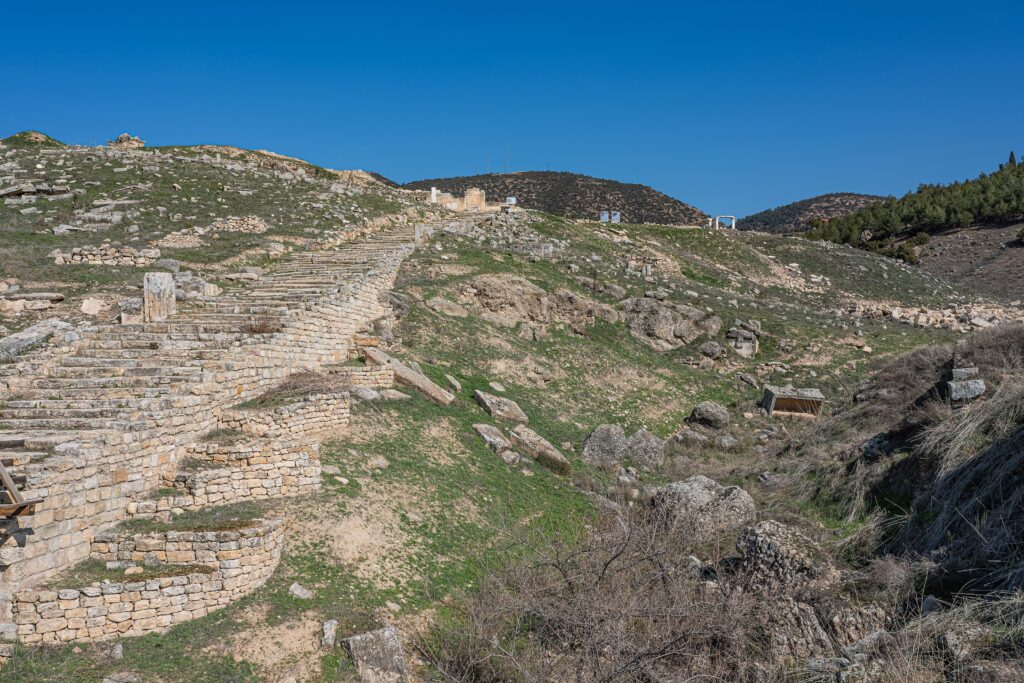
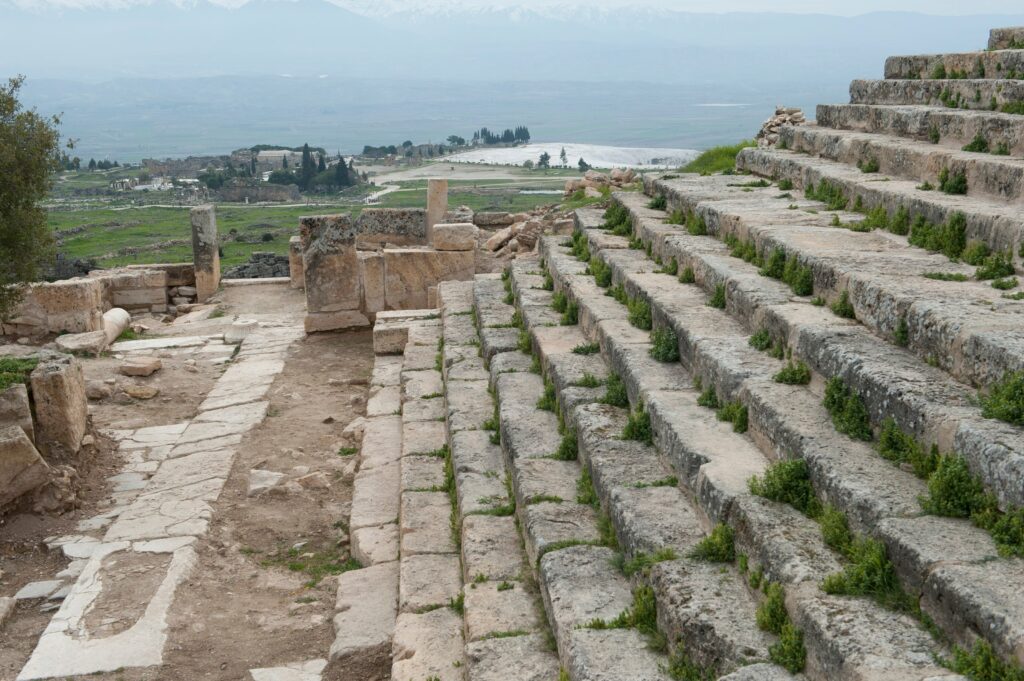
Papias was bishop of Hierapolis, the Roman city above today’s Pamukkale in Denizli Province. Tradition puts his birth around 60 to 70 AD and his death around 130, though some scholars say 140. His five books, the Exposition of the Sayings of the Lord, were probably written around 110 AD. All five are lost.
What survives are quotations in Irenaeus and Eusebius. Papias says he preferred “the living and abiding voice” to books, so he asked visitors what the elders had said naming Andrew, Peter, Philip, Thomas, James, John and Matthew. He also listened to Aristion and a presbyter named John, and he heard stories by the daughters of Philip.
His fragments touch the Gospels. Papias writes that Mark, the interpreter of Peter, wrote down accurately but not in order what he remembered, and that Matthew wrote the oracles in the Hebrew language. He also taught that Christ’s kingdom would last a thousand years on earth. From Philip’s daughters he heard of a man raised from the dead.
Eusebius did not admire him. He called Papias a man “of very limited understanding”, yet he quoted him, and he admitted that Irenaeus and others took up the thousand-year idea because Papias was so ancient. Today scholars read these fragments as an early and important window on how Christians remembered the first generation.
What you visit is Hierapolis itself. Italian team led by Francesco D’Andria announced the tomb of Apostle Philip there in 2011, close to the great octagonal Martyrium. Polycrates says that Philip and two of his daughters were buried in the city. Early writers disagreed whether this Philip was the apostle or the evangelist of Acts 21, but Hierapolis honored him as the apostle. My articles on Hierapolis Ancient City and the Martyrium of Saint Philip tell the story of the site.
2. Quadratus and the Church of Magnesia (about 125 AD)
Quadratus is the hardest name on this list. You will sometimes read that he was bishop of Magnesia, near Ephesus, and that Ignatius praised him. That does not match the sources. Ignatius did write to the church at Magnesia on the Maeander, but the bishop he names there is Damas, “your most worthy bishop”, whom the church should respect “on account of his youth”.
Eusebius mentions a Quadratus in three roles. One was a prophet in Asia, “renowned along with the daughters of Philip for his prophetical gifts”. One handed an apology for the Christians to Emperor Hadrian around 124 or 125 AD. And Dionysius of Corinth, quoted by Eusebius, names a Quadratus who became bishop of Athens after the martyrdom of Publius.
Whether these are one man is debated. Jerome treated the apologist and the bishop of Athens as one person, which scholars question because of the dates, and the Catholic Encyclopedia finds the evidence for linking the apologist with the prophet too slight. Only a short passage of the apology survives. It says that people healed and raised by the Savior were still alive, and “some of them lived even to our day”.
Where does Magnesia come from? The Orthodox Church honors Saint Quadratus on September 21 and says he preached at Athens and at Magnesia. The Orthodox Church in America places that Magnesia in Thessaly in Greece, not on the Maeander. Neither Eusebius nor Ignatius ties him to the Magnesia near Ephesus, so that link stays uncertain.
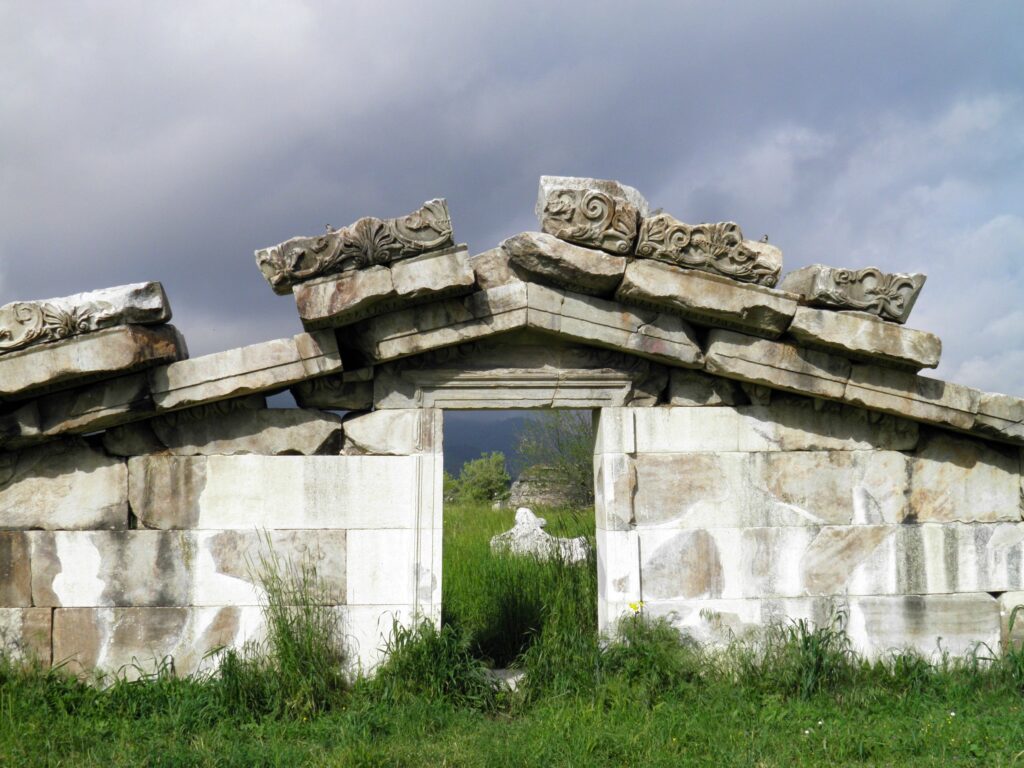
What you visit is the real Magnesia on the Maeander in Aydın Province, about 20 kilometers southeast of Ephesus in a straight line. A Byzantine list of cities counts it among the bishoprics of Asia, and Ignatius’s letter proves a church was there. The ruins lie at the west of the village of Tekin, and excavations have run since 1984.
The famous building is the Temple of Artemis Leukophryene, which Vitruvius credits to the architect Hermogenes. Column drums and blocks of the temple are laying in the grass today. My article on Magnesia ad Maeandrum tells the rest of the site’s story.
3. Melito of Sardis (died around 180 AD)
Melito was bishop of Sardis in the second half of the second century. Sardis is the city of Revelation 3:1, “thou hast a name that thou livest, and art dead” (KJV), written decades before him. Polycrates of Ephesus, writing around 190, says Melito “lived altogether in the Holy Spirit” and lies buried in Sardis.
Melito was one of the most productive writers of his time. Eusebius lists nearly twenty works, from On the Passover and On the Church to On the Lord’s Day and On Baptism. Almost all are lost. He also wrote an apology to the emperor, probably Marcus Aurelius, complaining that Christians were being “driven about in Asia by new decrees”.
After a journey to the East, Melito sent a fellow Christian named Onesimus a list of the books of the Old Testament, and Eusebius preserves it. It is often called the first Christian list of those books. Melito was not just a writer also a bishop who pleaded with an emperor for his flock.
One work survives whole, the sermon On the Pascha, written between about 160 and 170 AD. It was first published in 1940 from a papyrus codex found in Egypt. The Greek is polished, full of repetition and balanced pairs, and its subject is the mystery of Easter, the Pascha.
The sermon also has a dark side. Melito formulated the charge of deicide, saying that God was put to death by an Israelite hand. Some scholars link such words to later Christian anti-Judaism, and they still debate whether he meant biblical Israel or the Jews of his own day. Reading Melito means holding both things together: the beauty of the writing and the pain it later caused.
Melito kept Easter on the fourteenth of Nisan, the day of the Jewish Passover, like the other churches of Asia. Polycrates lists him among the Asian leaders who did the same. That puts him in the tradition of Polycarp of Smyrna, who had defended the same date in Rome. My article on Saint Polycarp of Smyrna tells his story.
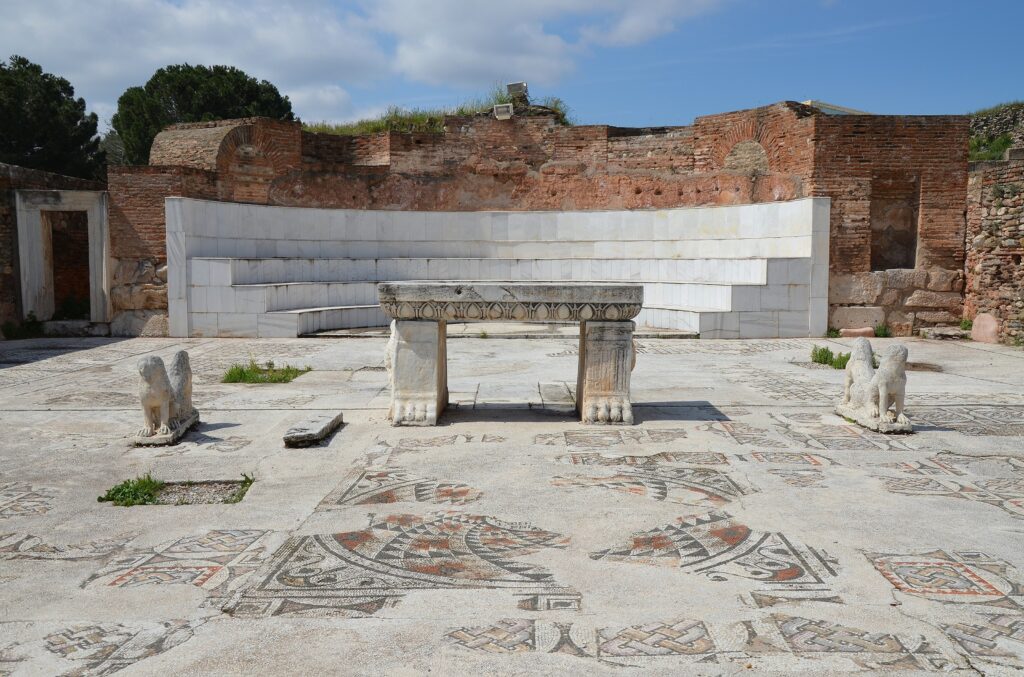
What you visit is Sardis, near the village of Sart in Manisa Province, about 72 kilometers from İzmir. The site is also open all year too. The synagogue is the largest Jewish site known from antiquity, and the restored bath-gymnasium complex beside it is impressive. The building you see is later than Melito, but it shows how strong was the Jewish community of Sardis.
A small Byzantine Church, called Church M, was built in the fourth century on the grounds of the Temple of Artemis. I recommend to start at the synagogue, then walk to the gymnasium and the temple. My Sardis Ancient City article describes every stop.
4. Apollinaris of Hierapolis (active in the 170s AD)
Claudius Apollinaris was bishop of Hierapolis, the same city as Papias, about sixty years later. Eusebius places him under Marcus Aurelius, next to Melito. Do not confuse him with Apollinaris of Laodicea, a fourth-century bishop whose ideas Diodore of Tarsus opposed. They are two different men with the same name.
Eusebius names an apology to the emperor, five books Against the Greeks, two books On Truth, and later writings against the Phrygian movement known as Montanism. Only a few extracts survive, and the longest deals with the date of Passover. Serapion of Antioch later sent Apollinaris’s writings to friends as proof that whole brotherhood rejected that movement.
His best-known story is the rain miracle. In a war against Germans and Sarmatians, Eusebius says, the army of Marcus Aurelius was dying of thirst. Christian soldiers of the Melitene legion knelt in prayer, lightning struck the enemy and rain saved the army. Apollinaris, says Eusebius, recorded that the emperor then named that legion the Thundering Legion.
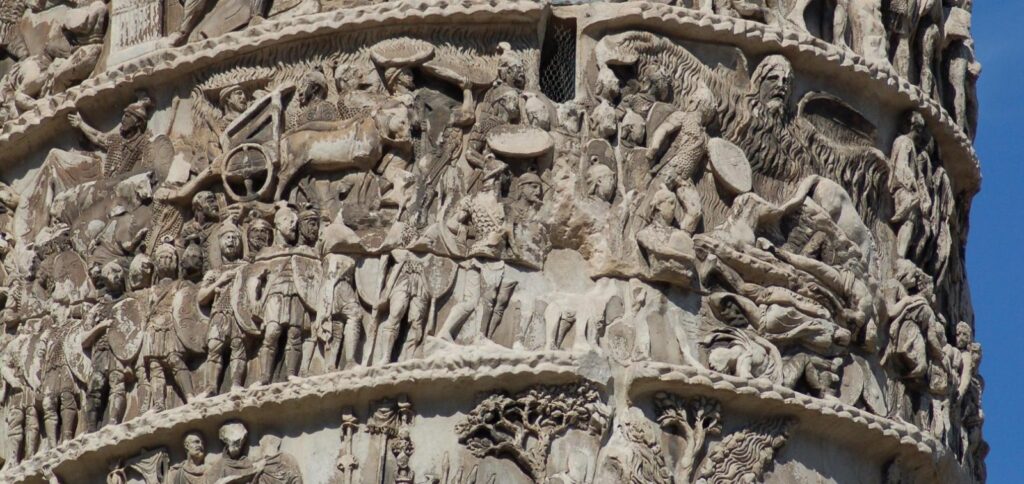
Historians are not sure what haapened. Marcus Aurelius did fight the Quadi in central Europe, and the rain scene on his column in Rome is famous. But the legion was XII Fulminata, based at Melitene, today’s Malatya, and it carried a thunderbolt emblem long before the 170s, so the nickname was not new. The story that the emperor then stopped persecution seems to rest on a forgery.
What you visit is the same Hierapolis as Papias. It was a bishop’s city in Phrygia, and in 531 Emperor Justinian raised its bishop to the rank of metropolitan. Standing there, you remember that two bishops wrote in this city about sixty years apart.
5. Polycrates of Ephesus (about 130 to 196 AD)
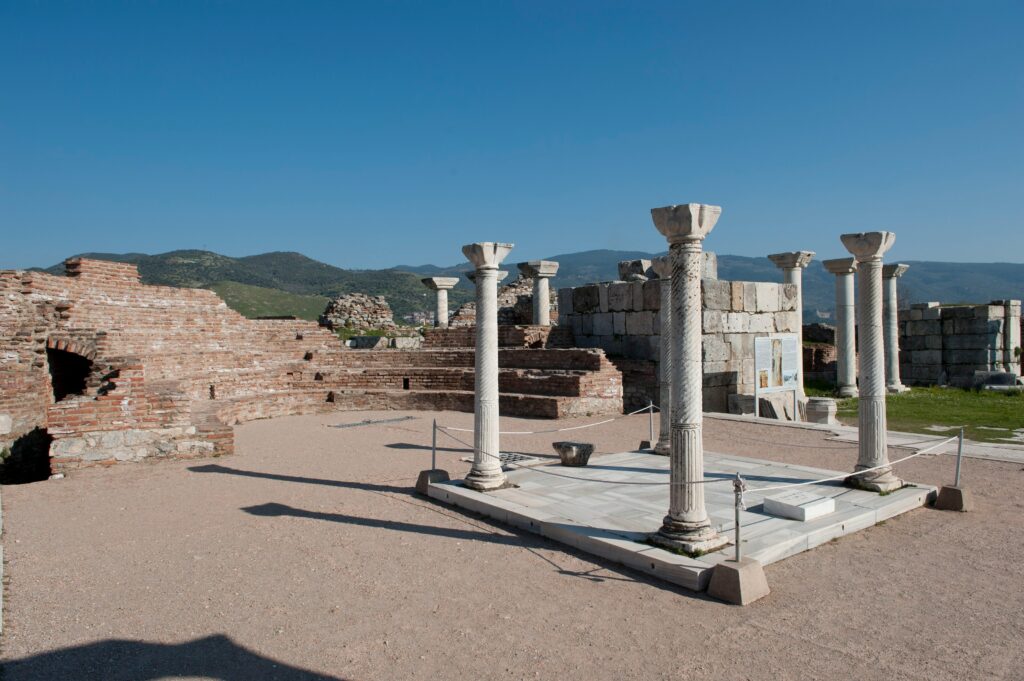
Polycrates was bishop of Ephesus, and his letter to Victor, the bishop of Rome, around 190 AD ties this whole list together. I tell his life and the Easter dispute in my article on Polycrates of Ephesus. Here I only want to show what his letter does for the other bishops.
In the letter Polycrates names the “great lights” of Asia: Philip and his daughters at Hierapolis, John at Ephesus, Polycarp at Smyrna, Thraseas, Sagaris, Papirius and Melito at Sardis. Of John he says only, “He fell asleep at Ephesus.” Early evidence for several burial places in this article comes from this one letter.
Victor’s answer was harsh. Eusebius says Victor tried to cut off the churches of Asia, but other bishops asked him to think of peace. Irenaeus of Lyon wrote that churches with an ancient custom should not be cut off, although he himself kept Easter on Sunday. The attempt did not take effect. Read more in my article on Irenaeus of Lyon.
The Quartodeciman custom faded slowly, by the time of the Council of Nicaea in 325 the churches kept Easter on a Sunday. In Ephesus I like to stop at the Basilica of Saint John on Ayasuluk Hill, because Polycrates says John fell asleep there. Ephesus is the heart of my guiding.
6. Serapion of Antioch (bishop from 191 to 211 AD)
Serapion was bishop of Antioch, today’s Antakya in Hatay Province, from about 191 until 211. I should be honest here: ancient Antioch lay in Roman Syria, so strictly it is not Asia Minor. But it is inside Turkey today and the churches of Asia Minor were close to it. Ignatius, who wrote to Ephesus, Magnesia and Smyrna, was bishop of Antioch too.
By the way, this corner of Turkey belonged to French-mandate Syria until 1939, so the old capital of Roman Syria is a Turkish city only since then. My article on Antioch gives its history, and my article on Ignatius of Antioch tells the story of the earlier bishop.
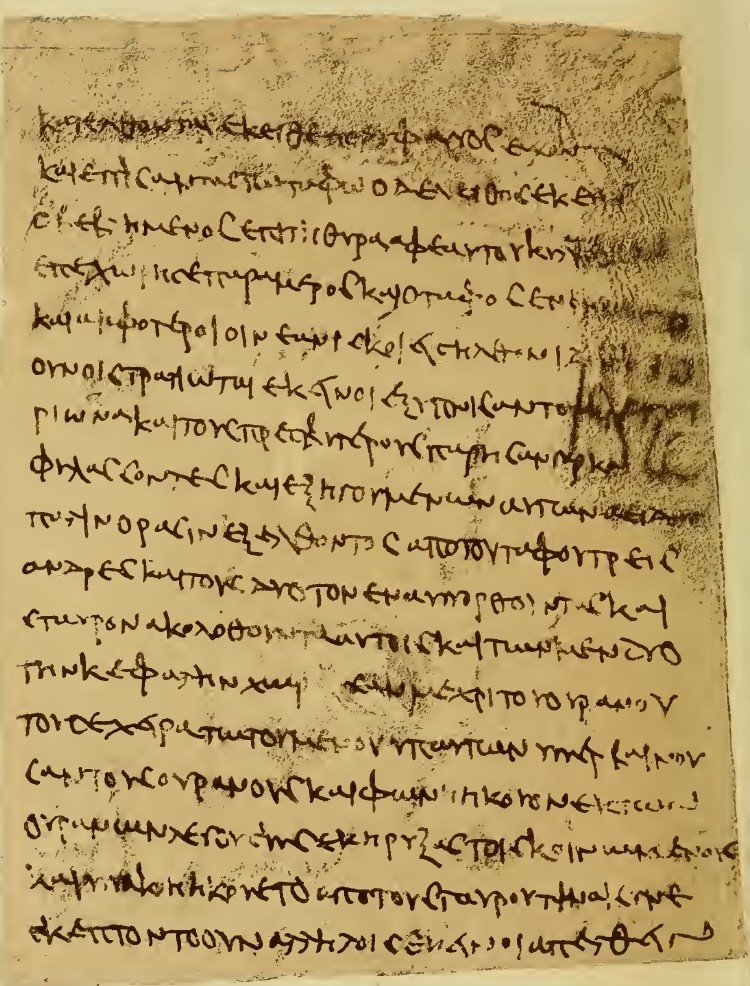
Serapion is best known for one case. Christians at Rhossus, a coastal town that is today’s Arsuz in Hatay Province, were reading the Gospel of Peter in church. When Serapion visited, he had not read it and said, “If this is the only thing which occasions dispute among you, let it be read.” Later he heard that it hid a heresy.
So he got copies from the successors of the Docetists, the teachers who said that Christ only seemed to have a body, and he read it. He found “many things in accordance with the true doctrine of the Saviour”, but “some things added”, and he wrote work against the book. His rule was simple: “we reject intelligently the writings falsely ascribed to them”.
This is an early picture of a bishop testing a book before his church used it. An apostle’s name on a text was not enough. A manuscript found at Akhmim in Egypt holds part of a Gospel of Peter, though scholars debate whether it is the book Serapion read. In another letter, against Montanism, he vouched for Apollinaris of Hierapolis.
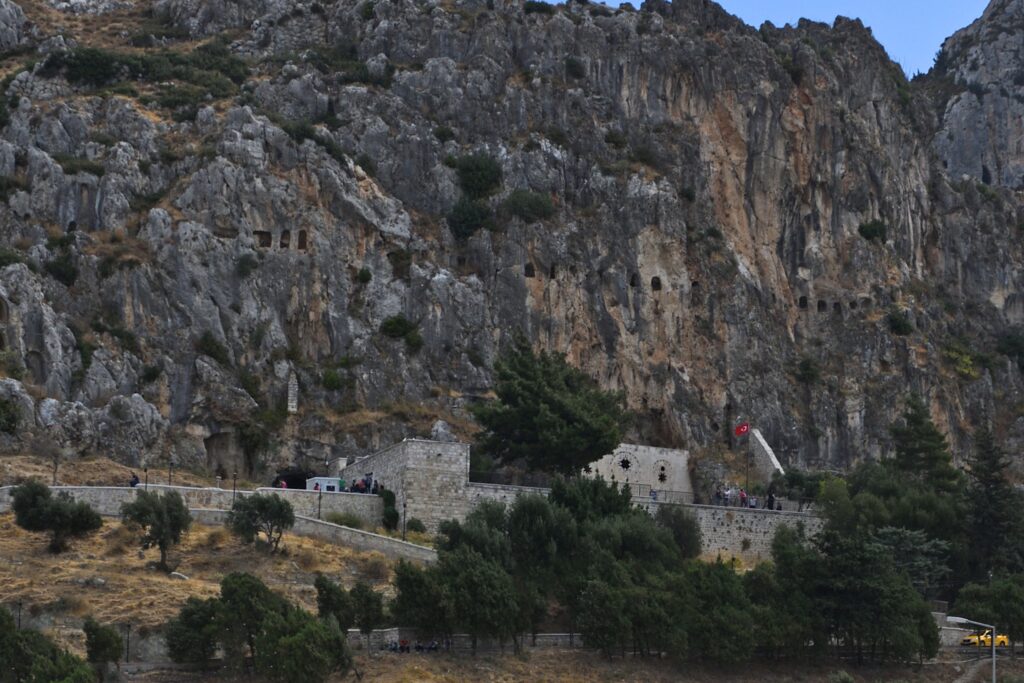
What you visit is Antakya. Cave Church of Saint Peter below the cliffs is the best-known early Christian site there. The Biblical Archaeology Society reported that it suffered only minor damage in the February 2023 earthquakes, but much of the old city was badly hit.
The Hatay Archaeology Museum, famous for its mosaics, was closed for reinforcement, and in February 2024 its director told Hürriyet Daily News that it would reopen in about three years. Please check current news before you plan a visit.
7. Diodore of Tarsus (died around 390 AD)
Diodore is the latest of the seven, and he belongs to the fourth century, not the second or third. He was probably born in Antioch, studied at Athens and became a monk. In the middle of that century, when Arian bishops ruled Antioch, he and his friend Flavian taught Nicene believers to sing the Psalms in alternating choirs.
Emperor Valens banished him, and in 372 he met Basil in Armenia. Later Meletius of Antioch made him bishop of Tarsus, Paul’s home city. Diodore served there from 378 until his death. He took part at the Council of Constantinople in 381, and Emperor Theodosius praised him as a champion of the faith.
Diodore led the Antiochene school of reading the Bible, which stressed the literal and historical sense against the allegory favored at Alexandria. His students included John Chrysostom, the great preacher, and Theodore of Mopsuestia, a leading theologian. Most of his many writings are lost, though a complete Psalms commentary, ascribed to him by its editor, has been found in modern times.
His reputation is mixed. Cyril of Alexandria called him a heretic, and a local synod at Constantinople in 499 called his views Nestorian, although Diodore died some forty years before Nestorius became bishop there. The Fifth Council in 553 condemned the Three Chapters, Theodore, Theodoret and Ibas, but not Diodore himself. See my articles on Nestorius of Constantinople and the Council of Ephesus of 431.
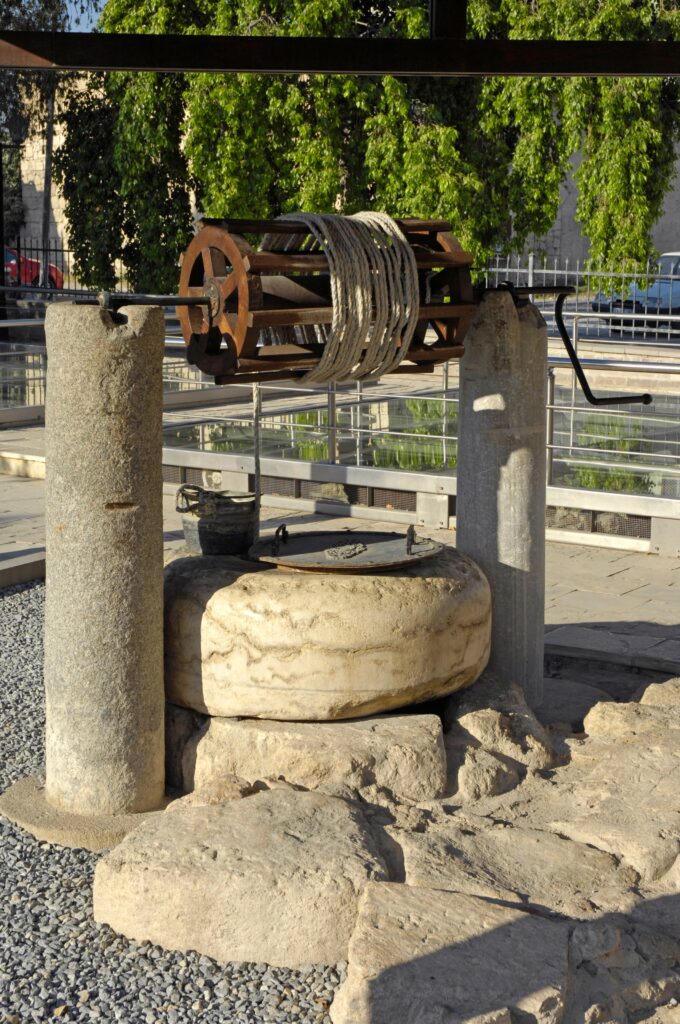
What you visit is Tarsus in Mersin Province, the birthplace of Paul. The sights include Cleopatra’s Gate, the only ancient city gate still standing, and Saint Paul’s Well beside Saint Paul’s Church, now a museum where services are held only occasionally. There is also the Tarsus Museum. I know of no place in Tarsus tied to Diodore himself. My article on Saint Paul of Tarsus adds more.
Why These Early Church Bishops Matter
Papias gathered memories of the first generation, Melito wrote On the Pascha, Polycrates wrote to Rome, Serapion tested the Gospel of Peter and Diodore taught Chrysostom. Quadratus remains the most uncertain of the seven, and that is part of the lesson: even the names of these early church bishops are fragile.
Together they show that the centuries between the apostles and the great councils were not a quiet gap. The church was being formed in its thinking, its pastoral care and its order by men like these. Most of their work is lost but the fragments are vivid enough to make the loss painful.
Almost every one of them served in a city you can visit. Hierapolis, Sardis, Ephesus, Antakya and Tarsus all have ancient remains, and Magnesia has its Temple of Artemis. For the wider cast, read my articles on important Christian people of Asia Minor, famous Christian people of Asia Minor and the martyrs and figures of the Seven Churches.
Frequently Asked Questions
Who was Melito of Sardis?
Melito was bishop of Sardis in the second half of the second century and died around 180 AD. He wrote nearly twenty works, most of them lost, including an apology to Marcus Aurelius and a list of Old Testament books. His sermon On the Pascha survives and was first published in 1940.
When did Papias of Hierapolis live?
Papias was bishop of Hierapolis, today’s ruins above Pamukkale. Tradition puts his birth around 60 to 70 AD and his death around 130, and his five-book work was written around 110 AD. The books are lost, but Eusebius and Irenaeus quote them.
What is Antioch called today?
Ancient Antioch on the Orontes is modern Antakya, in Hatay Province in southern Turkey. It lay in Roman Syria, not in Asia Minor proper, but early bishops such as Ignatius and Serapion served there.
Did the early church have bishops?
Yes. In the early second century Ignatius of Antioch wrote to the church at Magnesia and named a bishop, two presbyters and a deacon. The seven men in this article show how widespread the office was in Asia Minor and nearby.
Hire Biblical Tour Guide in Turkey
I’m a nationally licensed Turkish tour guide based in Kuşadası, nearby Ephesus. My day guiding is in Ephesus, İzmir and Pamukkale. That covers the Ephesus of Polycrates and the Hierapolis of Papias and Apollinaris, with the tomb of Apostle Philip on its hill.
My license is valid all over Turkey. For Sardis, Magnesia on the Maeander, Antakya or Tarsus, I can join you as your personal guide on a longer journey, while you arrange your transport and hotels yourself or through a licensed travel agency. See my guiding rates and guiding areas or write to me through my contact page.
I hope we will stand together in Hierapolis, where two of these bishops served, and at the tomb of Saint John in Ephesus. You can always write to me with your questions about the early church bishops of Asia Minor. See you soon, Hasan Gülday.